Sling Hook: A Reliable Component of Lifting Equipment
A sling hook is an essential component of a lifting system, designed to connect to a load or lifting equipment. Used in conjunction with textile, rope, chain, or webbing slings, it provides a secure hold during the lifting and handling of heavy objects. Therefore, choosing the right model directly impacts safety and efficiency.
Purpose
- Load Connection. A chain hook provides a secure attachment point between the sling and the object being moved or lifted.
- Safe Securing. It holds the load without slipping, and in some cases is equipped with a lock (latch) to prevent release during movement.
- Compatibility. Depending on the sling type (chain, rope, textile), a suitable fastening element with the required technical specifications is selected.
Materials of Construction
Sling hooks are made of high-strength alloy steel with an anti-corrosion coating. The material undergoes heat treatment, increasing its resistance to wear, deformation, and failure under critical loads. Paint or zinc coating provides additional protection against moisture, chemicals, and the environment.
Design Types
Sling hooks can vary in their design features and application methods.
- Shaped (with eye). Equipped with an eye for attaching to a strap and have no moving parts. They are used in simple lifting systems and in environments where sudden jerks are avoided.
- With a safety catch. Sling hooks (GOST) are a universal option with a spring-loaded latch that prevents accidental release of the load. They are used in most situations, especially when lifting people and valuable objects.
- Sling hooks. Allow you to connect multiple sling legs or hook them onto eyelets. Frequently used in installation and construction.
- Short hooks. Used to shorten chain ropes, allowing for quick adjustment of the length of the strand.
- Rotating hook for lashing. Allows free rotation around the axis, which is important when moving loads with changing positions in space.
Applications
- Industry and construction. Moving heavy structures, blocks, and metal structures.
- Warehouse logistics. Loading and unloading pallets, containers, and barrels.
- Shipbuilding and port operations. Handling heavy loads in high-humidity conditions.
- Installation and repair work. Lifting equipment and components in confined spaces.
How to choose the right option?
If you want to select and purchase hooks for slings, you need to consider the following:
- Load capacity. This is always indicated on the marking and must correspond to the working load when connected to the sling.
- Sling type. Select a hook that is compatible in shape and attachment method—for example, with an eye for a webbing sling or a special link for a chain rope.
- Latch type. When handling unstable loads, it's best to choose a model with an automatic or reinforced latch.
- Operating conditions. When working in aggressive environments (sea air, chemicals, low temperatures), choose hooks with anti-corrosion treatment.
- Certification. A reliable hook must meet GOST or international standards (EN, ISO) and have a product data sheet.
In conclusion
Load hooks are more than just a fastening element; they are a key part of the lifting system, on which the safety of the entire process depends. Proper selection, regular inspection, and compliance with technical requirements ensure reliable and long-term operation, both in industry and construction. When handling heavy loads, it's important not to skimp on quality: choosing the right model is an investment in safety and efficiency.

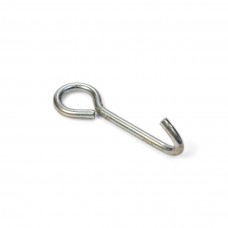
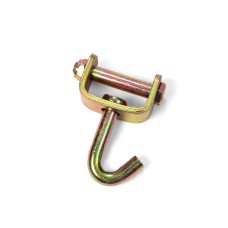
 In stockProduct code: МК- 1.5 TON19 ₴
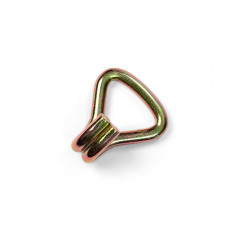 In stockProduct code: МК-1,5" 2 ТON24 ₴