Belt sling

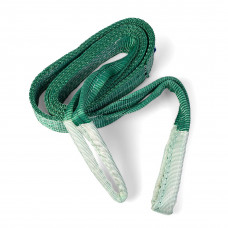
Belt sling: a reliable element of lifting and fastening systems
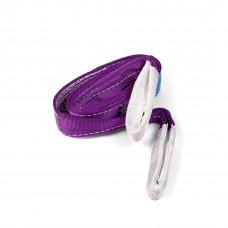
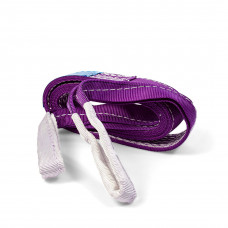
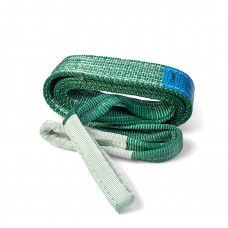
A belt sling is a flexible load-gripping device designed for lifting, moving and fastening various loads. It is widely used in construction, logistics, warehousing, industry and even in everyday life due to its versatility, reliability and ease of use.
Purpose
A belt sling has one main function - safe fixation of cargo during its transportation or lifting. Unlike chain or rope analogs, these models are made of durable synthetic textile tapes, which makes them lighter and easier to use, especially when working with delicate or painted surfaces.
The sling effectively distributes the load, minimizing the risk of damage to the cargo. It can be used in loading and unloading operations, equipment installation, and also as part of cargo ties and rigging systems.
Manufacturing materials
Special textile materials with increased strength and wear resistance are used for the production of belt slings:
- Polyester (PES) - resistant to moisture, ultraviolet radiation and most chemicals.
- Polyamide (PA) - has high elasticity and strength.
- Polypropylene (PP) - a lightweight material used in less loaded structures.
The tape threads undergo thermal and chemical treatment, providing resistance to abrasion, deformation and temperature changes.
Design features
Belt slings are classified according to a number of parameters:
1. By the number of branches: single-branch, double-branch and multi-branch.
2. By type of ending:
- with loops (stitched or protected)
- with metal hooks or thimbles
- with buckles or carabiners
3. By lifting capacity: from 0.5 to 10 tons or more (designated by color according to European standards).
4. By tape width: as a rule, a 30, 40 and 50 mm belt sling is used.
5. By length: varies depending on the task, can be either fixed or adjustable.
An important feature is the presence of a label on the tape with technical information: type, lifting capacity, date of manufacture, standard, etc.
Advantages
Belt slings have a number of advantages:
- Light weight and compactness - easy to transport and store.
- Do not damage the load - especially important when working with furniture, equipment, painted surfaces.
- High strength - modern materials provide a long service life.
- Resistance to external influences - moisture, frost, sunlight.
- Safety in use - subject to operating conditions.
Application
Belt slings are used in various areas of human activity:
- Construction - lifting and moving building materials and structures.
- Warehouses and logistics – securing cargo during transportation.
- Mechanical engineering – installing and moving equipment.
- Auto service – towing and securing cars.
- Everyday tasks – moving, lifting furniture upstairs, etc.
In conclusion
A belt sling is a practical and reliable solution for those who work with cargo. Due to its flexibility, strength and versatility, it has become an indispensable element in the arsenal of specialists in a wide variety of industries. The main thing is to choose and buy the right belt sling for specific tasks and monitor its technical condition.