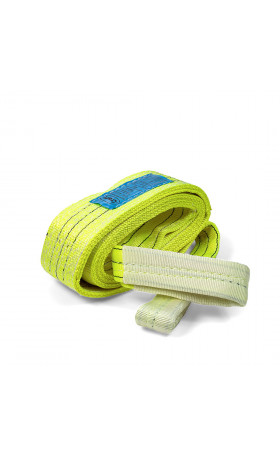
Tie-down straps
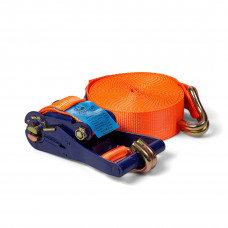
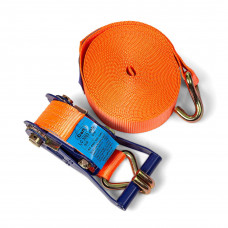
Car Ties: Reliable Fastening for Transporting and Storing Loads
Ties (also known as tie-down straps) are specialized devices designed to securely fasten loads in a vehicle's bed, trailer, roof, or trunk. They prevent items from shifting, tipping, or falling while driving, significantly increasing road safety and helping to preserve the integrity of the transported items. These accessories are also useful for organizing cargo storage in garages, warehouses, or workshops.
Main Types
Car tie-downs come in several varieties, each suited for specific tasks and types of cargo:
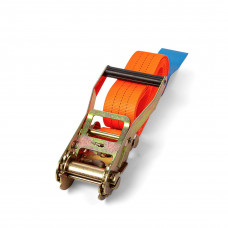
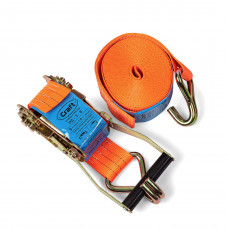
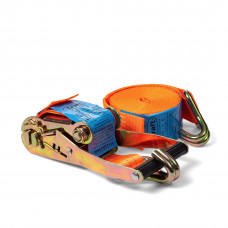
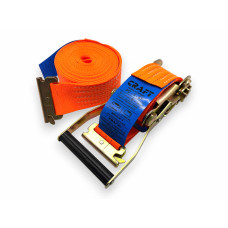
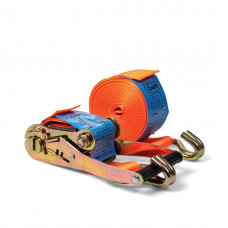
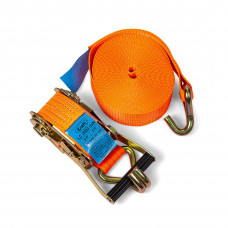
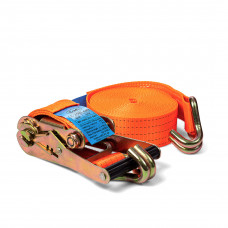
- Ratchet belts. The most common and reliable option for medium and heavy loads. They consist of two parts: a strap with a fixed end and a ratchet. This allows for strong tension and securely fastening the load. They are suitable for securing furniture, appliances, building materials, and equipment.
- Elastic rubber bungee cord with hooks. Simple, flexible, and quick to use. Ideal for light to medium-sized cargo in the trunk of a car (bags, boxes, small crates). They provide a tight fit due to their stretchability, but are not suitable for very heavy or dynamic loads.
- Luggage tie-down nets. Elastic nets with hooks around the perimeter. Perfectly secure odd-shaped luggage (bicycles, sports equipment, large boxes). They fold compactly and are convenient for quick application.
- Specialized straps. Include options for securing cars on car carriers (with additional protective pads), chain ties for extra-heavy loads, or combination systems with reinforced elements.
Materials and Construction
Modern car tie-downs are made from synthetic fibers:
- polyester (the most popular) – high strength, UV, moisture, and abrasion resistance;
- polyamide (nylon) – good elasticity;
- polypropylene is a budget option with acceptable characteristics.
Straps are typically 25 to 100 mm wide. Tensioning mechanisms (ratchets) are made of steel with a protective coating against corrosion. End fittings—hooks, loops, or other fasteners—are also metal, often with protective pads to prevent damage to the product.
The materials used provide:
- temperature resistance from -40°C to +100°C;
- minimal elongation under load (usually no more than 7%);
- durability with repeated use.
Instructions for use
Safe transportation depends on proper use:
1. Inspect before use. Check the strap, seams, mechanism, and hooks for cuts, tears, corrosion, or deformation. Do not use damaged products.
2. Selecting a fastening method:
- Top-down lashing – to prevent shifting.
- Diagonal lashing – to prevent tipping.
- Loop lashing – for individual pieces of luggage.
3. Tensioning. Use a ratchet to apply sufficient and even tension. Do not overtighten to avoid damaging the luggage or the belt. Avoid creating knots in the belt.
4. Quantity and placement. Use at least two straps for pressure, four for complete fixation in different directions. Place the straps evenly, approximately every 1.5 meters or more often if necessary.
5. Inspection on the road. After the first few kilometers, stop and tighten the lashings if they are loose.
6. Storage. After use, roll them up neatly and store them in a dry place, away from aggressive substances and sharp objects.
Important: lashings are intended solely for securing cargo. Do not use them for lifting, towing, or moving it.
In conclusion
A car tie-down is a simple yet crucial element for ensuring safety during the transportation and storage of various objects. The correct choice of type, material, and application method will allow you to securely fasten virtually any load, minimize risks, and ensure comfortable and safe transportation. Regular inspection and adherence to operating instructions will guarantee the long service life of these devices.